
Time to Do Right by Moms?
American politics has not been easy on the moms. They’ve been branded as key swing voters - soccer moms in the 90s, security moms in the early aughts, and MAHA moms in 2024. For this cycle it looks like they’re trying to bring back the wine moms. Candidates make policy promises to get their votes, then conveniently forget them when it comes time to govern.
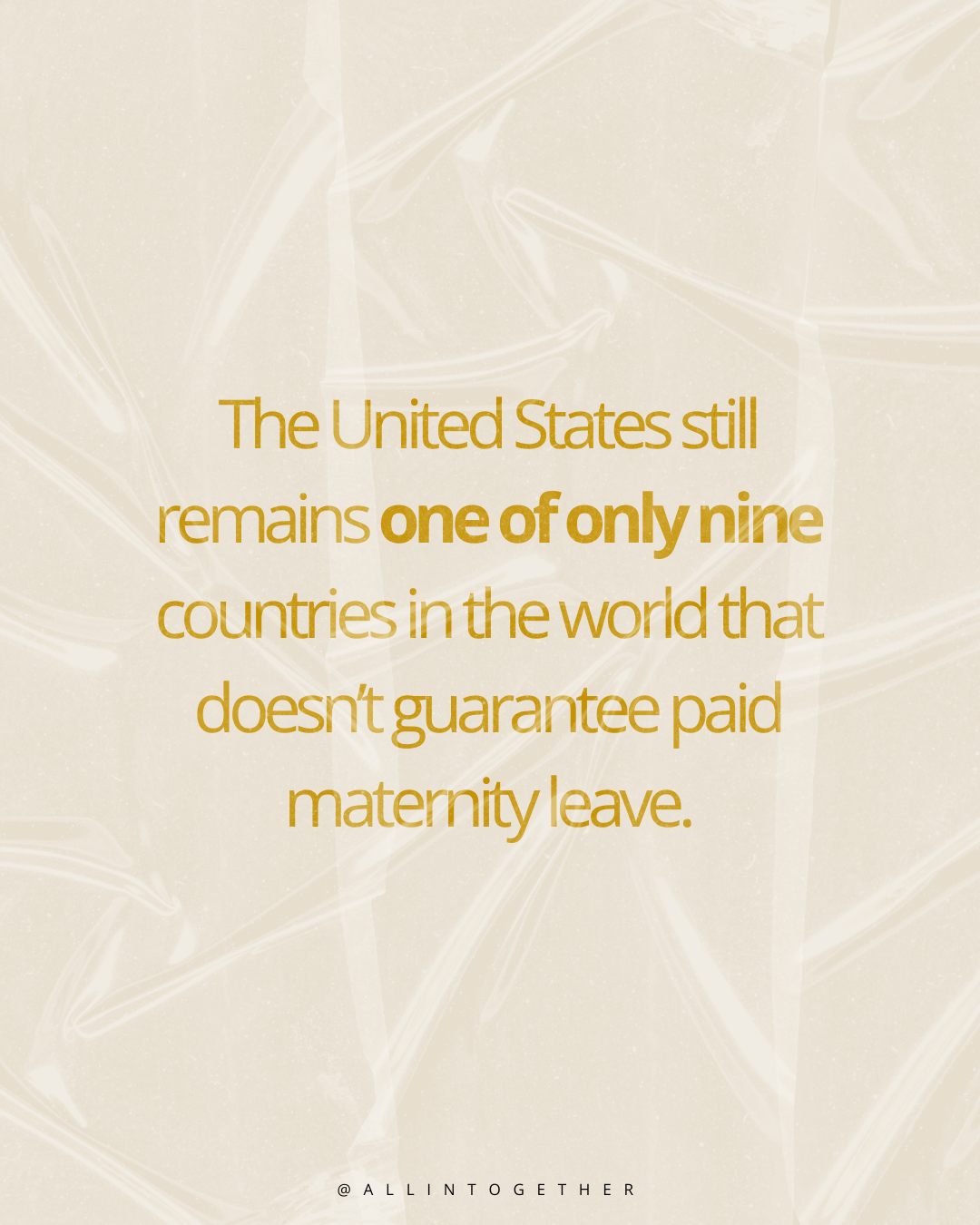
The United States still remains one of only nine countries in the world that doesn’t guarantee paid maternity leave. We share this distinction with countries like Papua New Guinea and the Marshall Islands. Some states are taking action. Virginia recently became the 14th state in the country to guarantee paid family and medical leave. But as companies simultaneously roll back their parental benefits they expanded during the pandemic, more families are depending on the government to set the floor for support. The floor is currently set way too low. Only 27% of private sector workers receive paid leave through their employer - and the lowest-wage employees, predominantly women of color, are the ones least likely to get it.
This highlights a disappointing fact. As much as campaigns and the media focus on moms as a voting bloc, how often do they actually ask mothers what matters to them? This Mother’s Day, we combed the data to find out.
Financial Concerns are a Family Issue
As our friends at MomsRising can attest, moms are paying a lot more attention to their grocery receipts than the stock market. Parents overwhelmingly say prices and cost of living (45%) matter most in judging the economy, way ahead of wages and jobs (11%) or stock market performance (2%). Politicians talk so much about the stock market they forget that most families don’t live by the S&P.
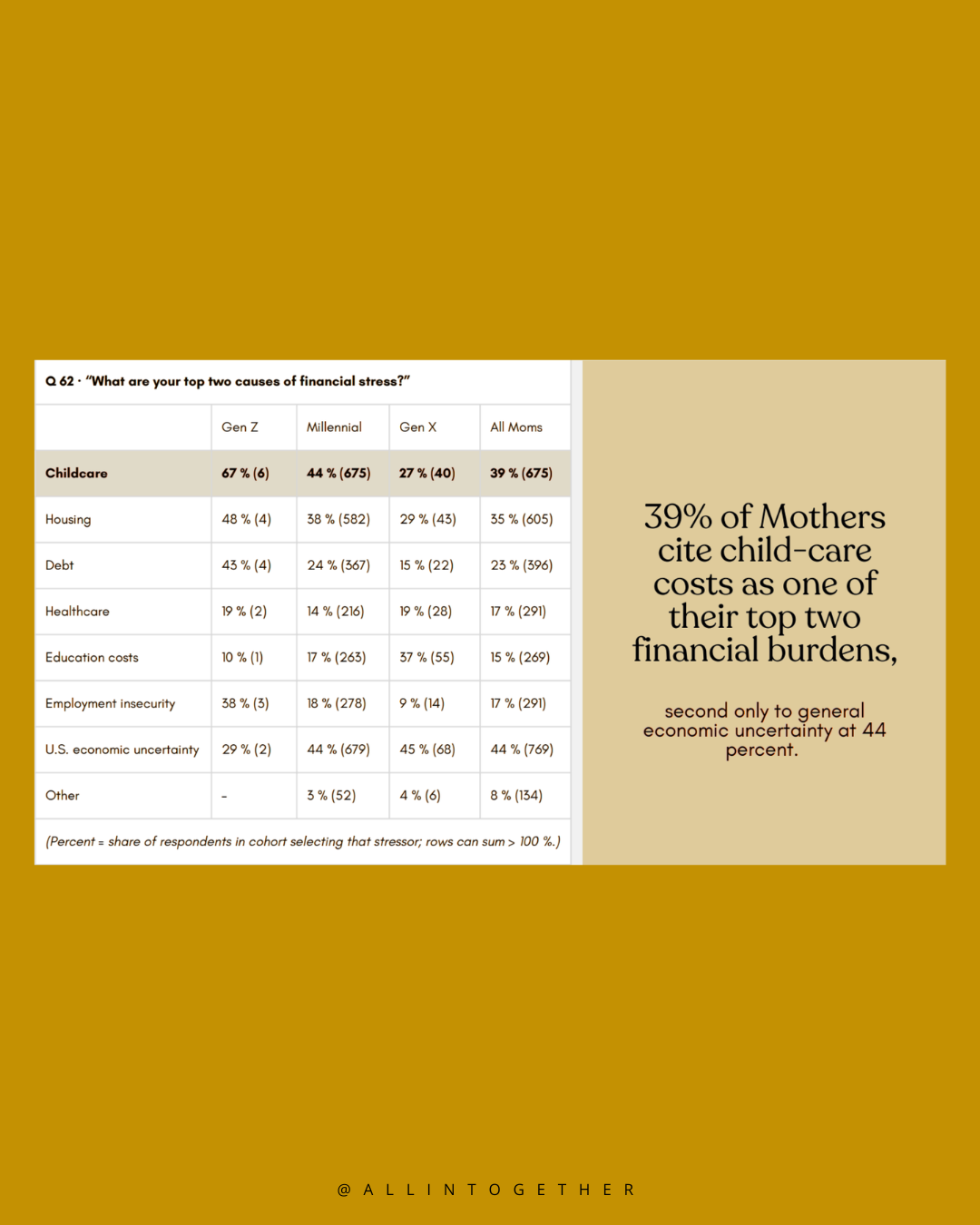
The costs driving financial anxiety aren’t ones that can just be waved away. They are specific, and they are the basic building blocks of family life. The 2025 Motherly State of Motherhood Survey found childcare was the number one cited cause of financial stress (39%), with housing at a close second (35%). So it’s not surprising that 81% of parents say childcare access and cost should be a priority at the state and local level.
Some state and local governments are listening. New Mexico became the first state in the country to offer universal childcare in 2025. Both red and blue states are stepping up with policy action to increase childcare funding and support. But the pullback of COVID-era Federal funding has left a gaping hole that states and cities can’t fill alone.
This is a structural issue that economists call Baumol’s cost disease. In labor-intensive industries like childcare and healthcare, costs rise over time to compete with other sectors, not because productivity improves, but because workers in those industries need wages that keep pace with the rest of the economy. Though these industries which are dominated by women, still remain grossly underpaid. This problem is only going to get worse, because we can’t automate away teachers and daycare workers. The only proven solution is sustained government subsidies or public support. Without it, the market fails families by design.
When we started working on this post our colleague Jill had this to say:
“The loneliness of motherhood irks me the most. We cannot rely on our partners to step in because men are often inadequate at handling issues that involve the children. This has caused many moms, myself included, to bear the brunt of it all - housework, childrearing, carpooling, planning, doctor’s appointments, home repairs, discipline - and at the same time we are forced to provide an additional income in order to survive the rising costs of life!
Plus women my age, Gen X, have to manage the issues of their aging parents. Thankless job after thankless job and there is no one to step in to help with any of these issues except OTHER MOMS, who are also overwhelmed AF but of course reliable because throughout this journey, I learned one thing.
Moms get shit done. It makes us more productive, more valuable at work, but also a bit dead inside.”
We’re already seeing the consequences. High childcare costs are pushing women out of the workforce, and pushing some to delay having kids, or choose not to have children at all. This isn’t a selfish personal choice as some make it out to be, it’s a response to a system that makes having a family prohibitively expensive.
Parents Want Electeds to Prioritize Families
The concerns for families don’t stop at costs, though they’re never far from mind. Parents want elected officials to stop treating quality of life and family wellbeing as just a campaign talking point and put the money where their mouth is.
A Kaiser Family Foundation survey of parents from last summer found broad bipartisan support for regulations on food additives, reflecting a deep concern for children’s health. These aren’t fringe issues, these concerns span party lines and income levels. Healthcare costs are also galvanizing voters. 69% of parents said the cost of healthcare was a problem for their family, and 93% said they wanted elected officials to prioritize affordable healthcare and food access. Americans who identify with the MAHA movement, key swing voters, put healthcare costs as their top concern for the midterms.
These cost concerns will shape electoral outcomes. MAHA moms swing from Democratic to Republican candidates was instrumental in the 2024 elections. But recent policy actions show that support isn’t set in stone. These moms who voted for changes on health and the cost of living are watching to see if that change materializes. So far it hasn’t.
Jill’s words illustrate an increasingly common reality: the expectation to hold families (and frankly the economy) together when budgets are tight and support isn’t coming. For women in the sandwich generation, caregiving concerns loom even larger. The party and politicians who deliver for mothers, will find themselves the beneficiaries of one of the most consistent groups of voters in the country. The ones who are all talk and no action will see their support vanish. Or the third scenario, where no one delivers and these moms stay home.
This Mother’s Day let’s not just praise mothers, let’s champion their needs and push for structural change.